A good Saturday has a shape to it. It starts slowly, it never rushes toward anything, and by the time the light goes it has covered more ground than most weeks do. Here is how the women of the club stretch one day into something closer to a small holiday.
Trophy Wife AtelierMy Store Admin
Late light on the harbor, somewhere past six.
The trick to a long Saturday is that nobody announces it. There is no group message laying out a schedule and no one arrives with a plan. It happens because a few people are awake early, the weather holds, and everyone keeps saying yes to the next small thing.
It usually begins on somebody's porch around seven. Coffee, the good kind, made in a pot rather than a machine. Somebody's dog is already out on the lawn. The conversation at this hour is mostly logistics that never get settled, which is the point.
The morning is for the courts
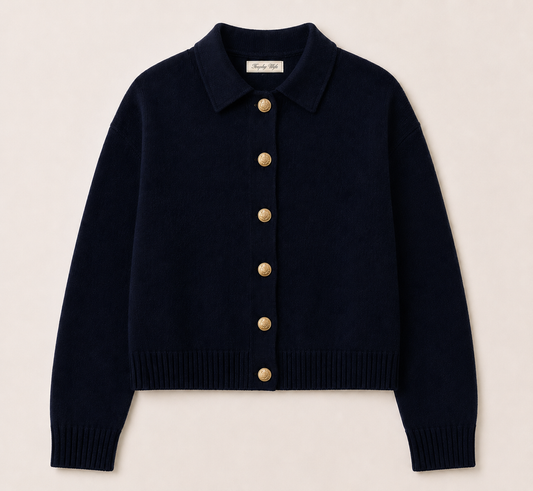
By nine there is tennis, and the tennis is genuinely secondary. What matters is that everyone is outside, moving, and dressed for weather that will change twice before lunch. This is the hour when a heavy knit earns its place, because the courts hold the cold well into the morning and nobody wants to run back for a layer.
The uniform sorts itself out. Apleated skirtthat can take a full set without needing attention, socks pulled up, and something over the top that comes off by the second game and gets tied around the waist for the rest of the day.
The courts stay cold until the sun clears the hedge.
Somebody always brings a thermos that nobody asked for and everybody uses. Somebody else forgets a racket and borrows one that is thirty years old and better than theirs. The scoring gets loose by the third set and then stops entirely.
The whole day works because nobody is trying to make it a day. It just keeps going and everyone lets it.
Lunch takes two hours on purpose
Lunch is where a long Saturday separates itself from an ordinary one. An ordinary Saturday eats standing up at the counter. A long one sits down, outside if it can, and stays there well past the point where the plates are empty.
The food is rarely ambitious. Tomatoes that were bought that morning, bread from the place that runs out by eleven, something cold to drink and enough of it. What takes the two hours is the sitting, and the fact that leaving would mean deciding what comes next.
Into town for whatever the errand actually was. Back at the courts, watching rather than playing.
The afternoon drifts
This is the stretch that most people skip. There is an errand in town that takes twenty minutes and somehow fills two hours, because the walk there runs past four people worth stopping for. Somebody buys flowers with no plan for them. Somebody swims.
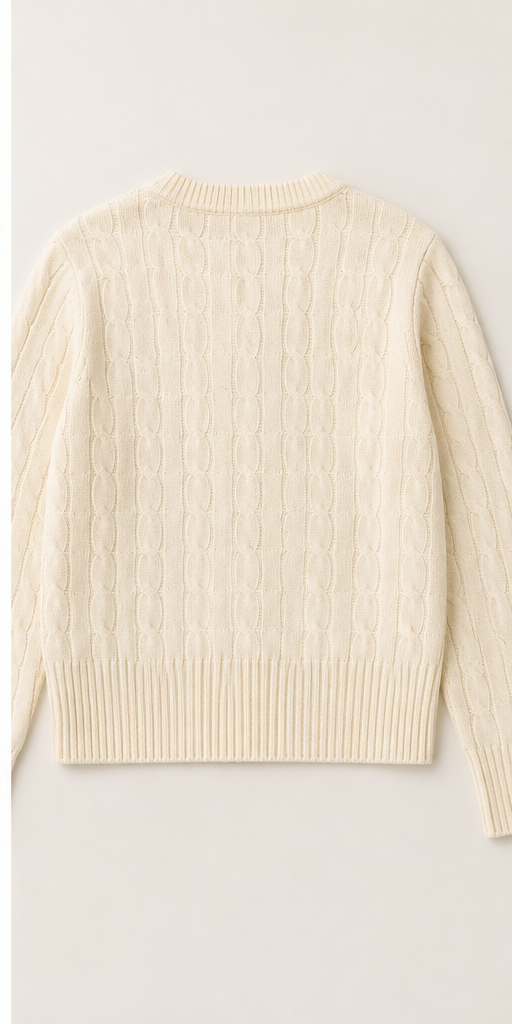
What you wear in the afternoon has to survive being sat on, walked in, and worn into water it was never meant for. That is why the pieces that last are the plain ones. Acable knit cardiganthat goes over a swimsuit on the way home and looks the same the next morning.
"We tried to plan one of these once and it was over by two o'clock. The good ones only happen when nobody is in charge."
A member, on the Saturdays that work
Nobody changes very much for dinner
Somewhere around six the day turns, and everyone goes home for forty minutes. This is not a costume change. It is a shower, a clean shirt, and swapping the sneakers for loafers. The people who overdress at this point are the ones who have not done a long Saturday before.
Dinner lands wherever there is space. Someone's kitchen, a long table pushed onto grass, occasionally the beach when the wind is behaving. It runs late because nobody has anywhere to be, and it ends when the last person stops refilling the same glass.
By then the day has covered the courts, the town, the water, and a table. It took no planning and it is the one people talk about in February.
The forty minutes between the water and the table.